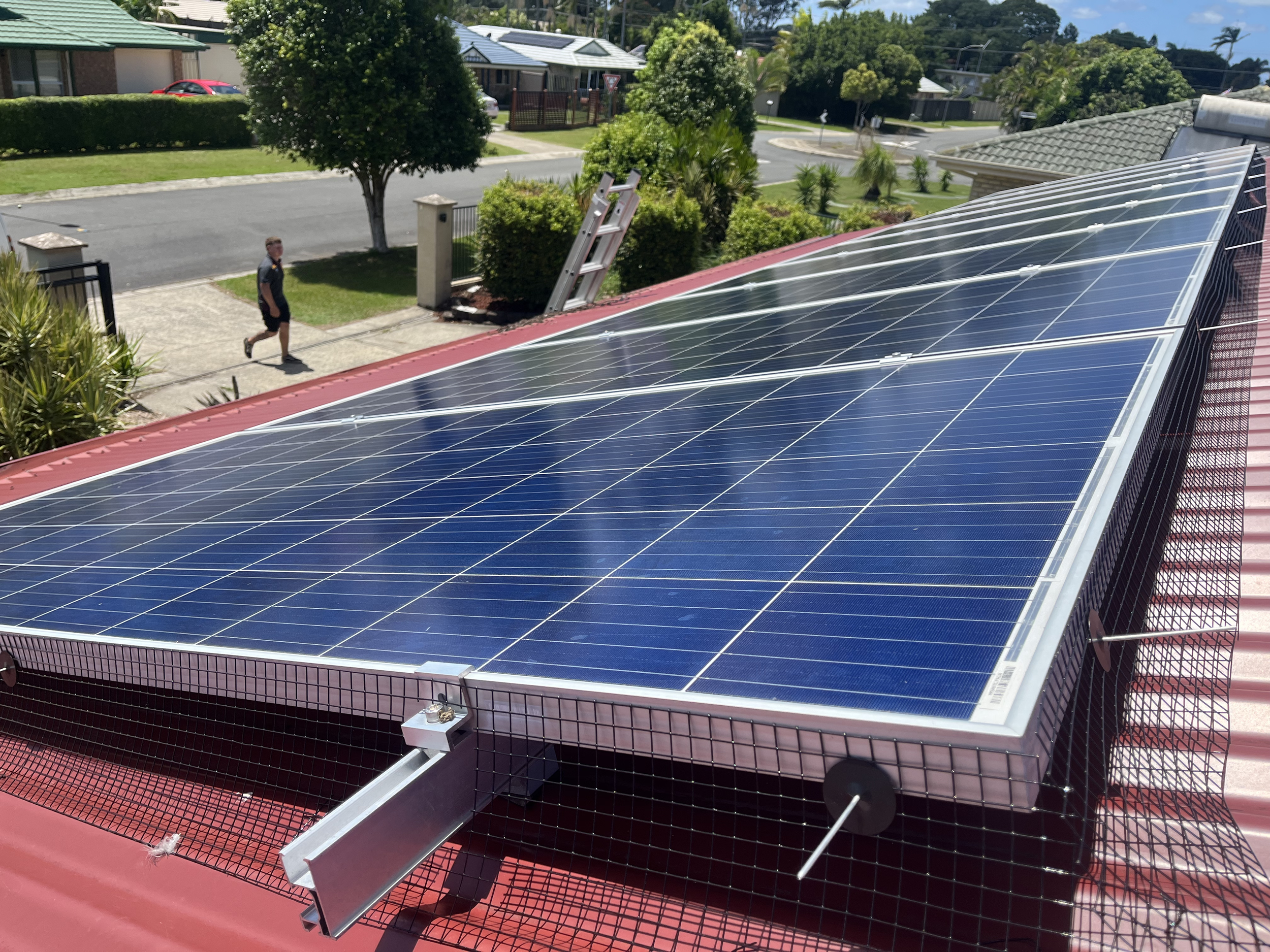
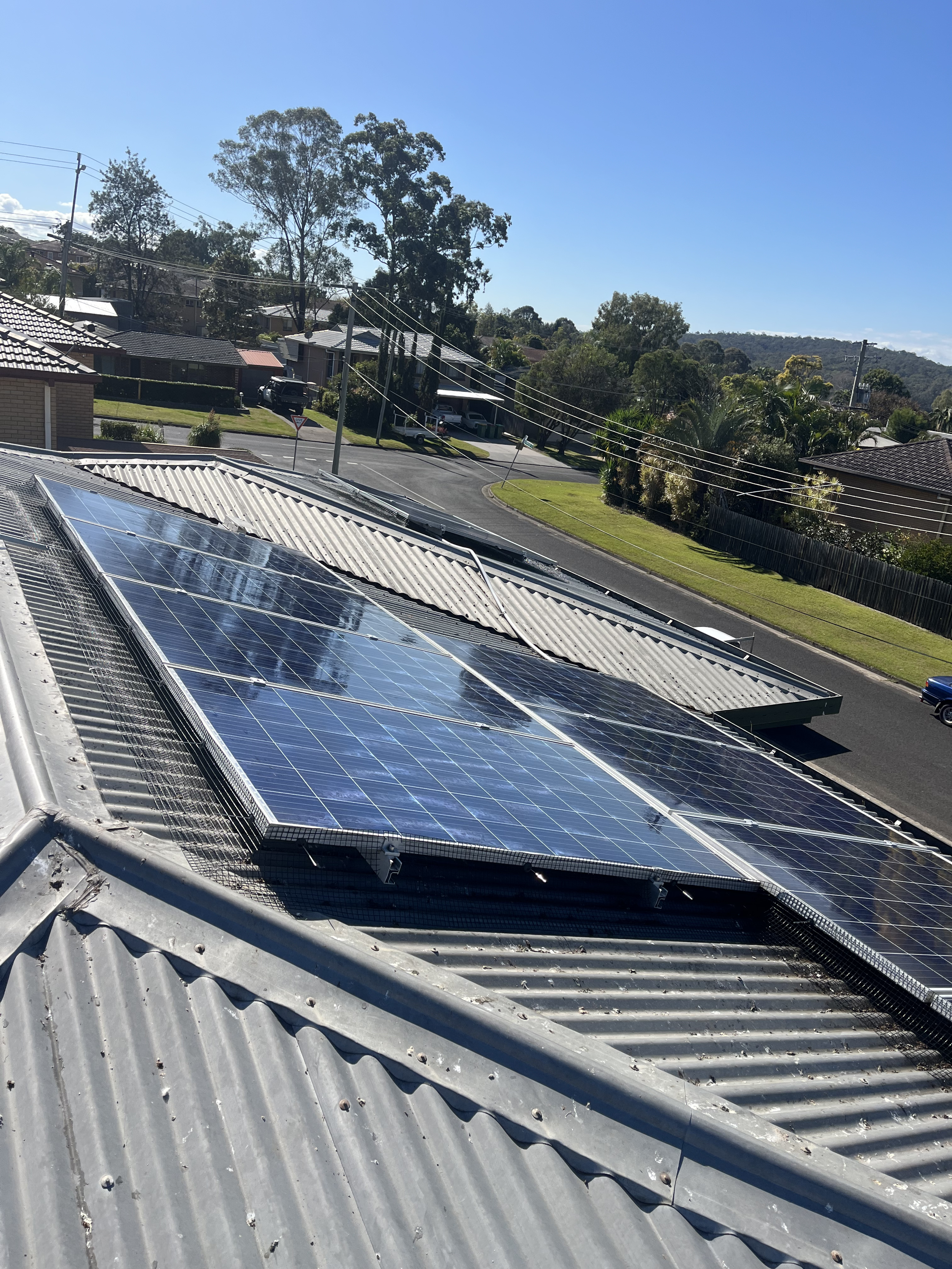
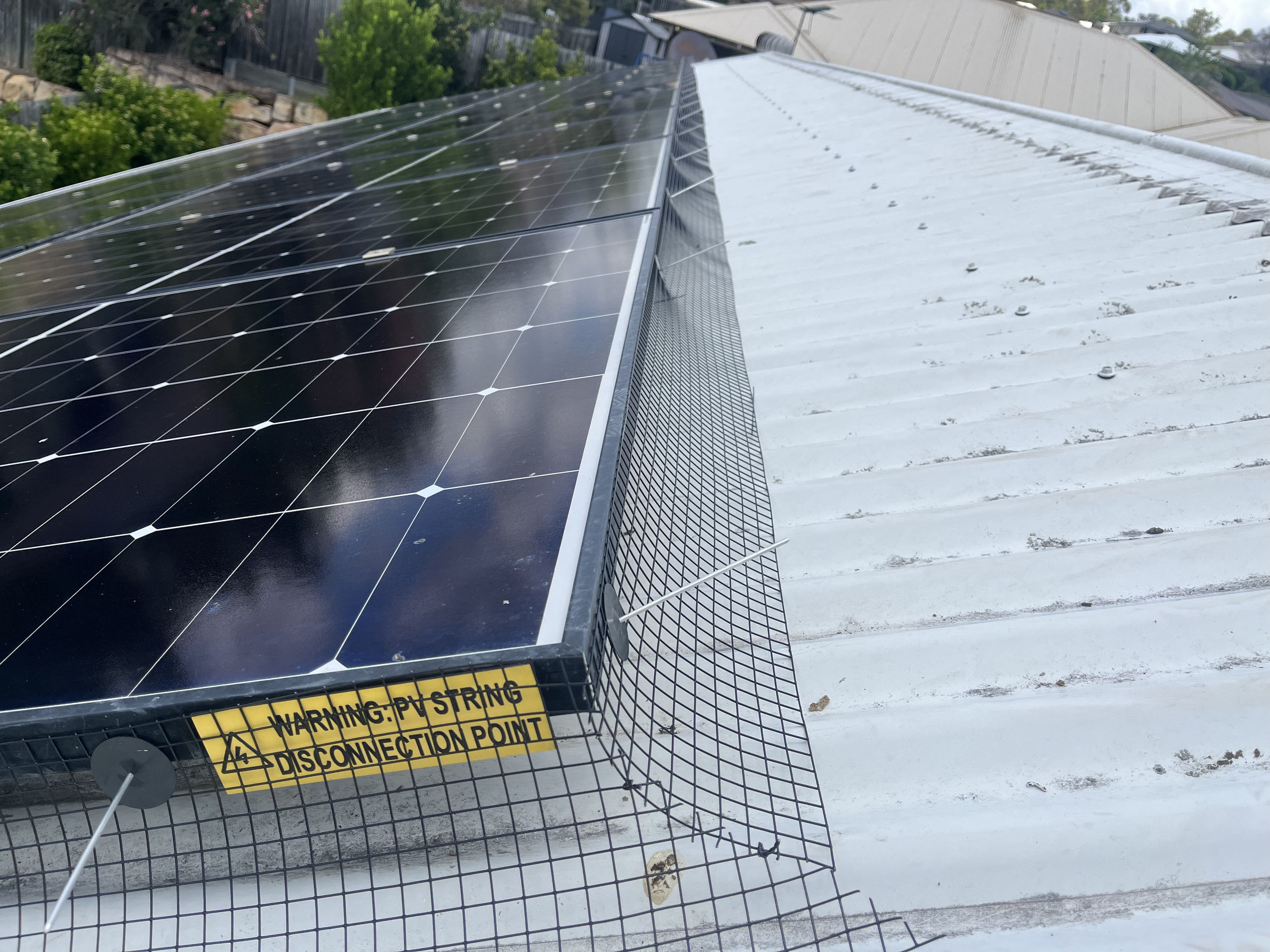
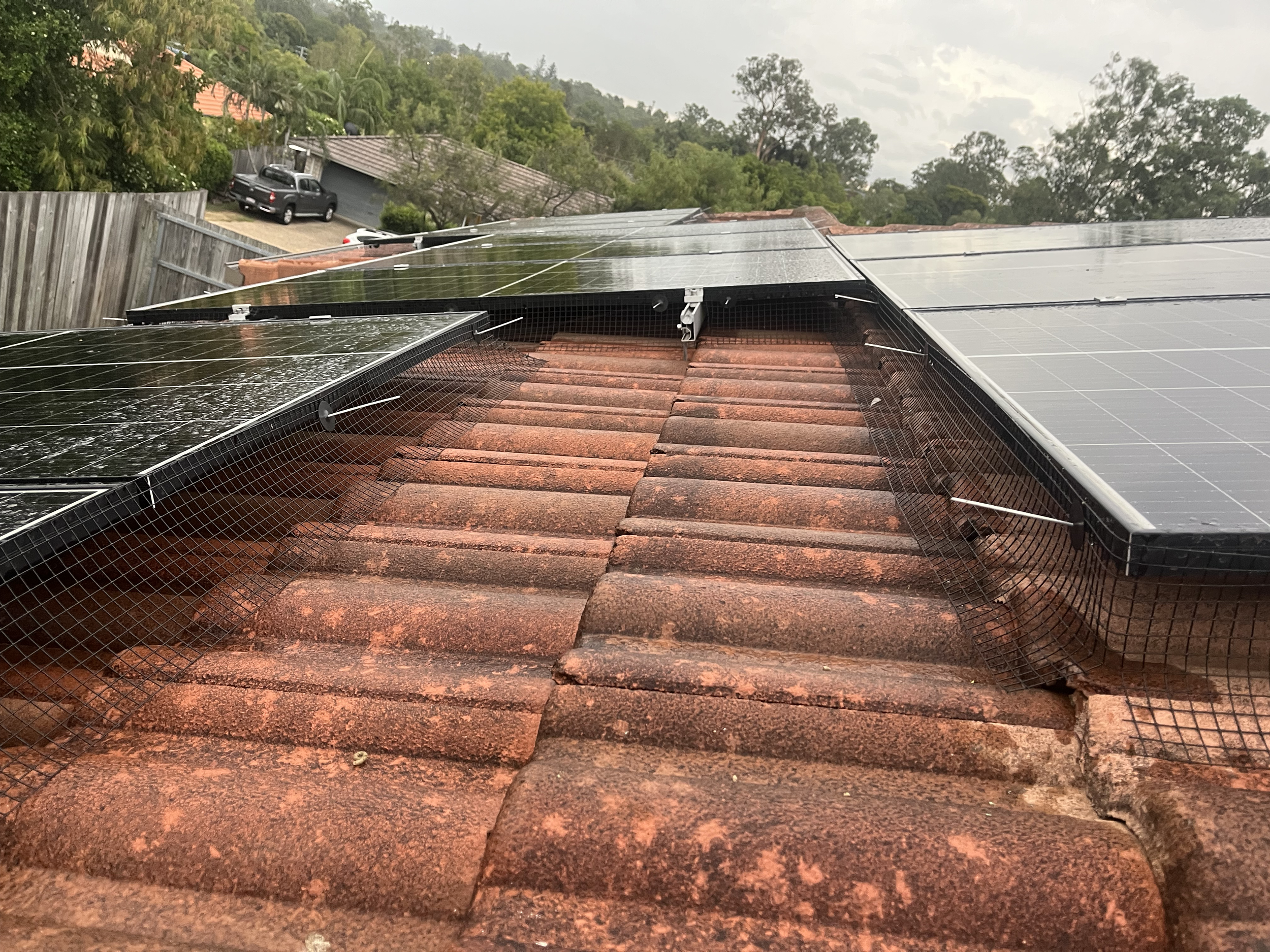
Why Bird Proofing is Essential
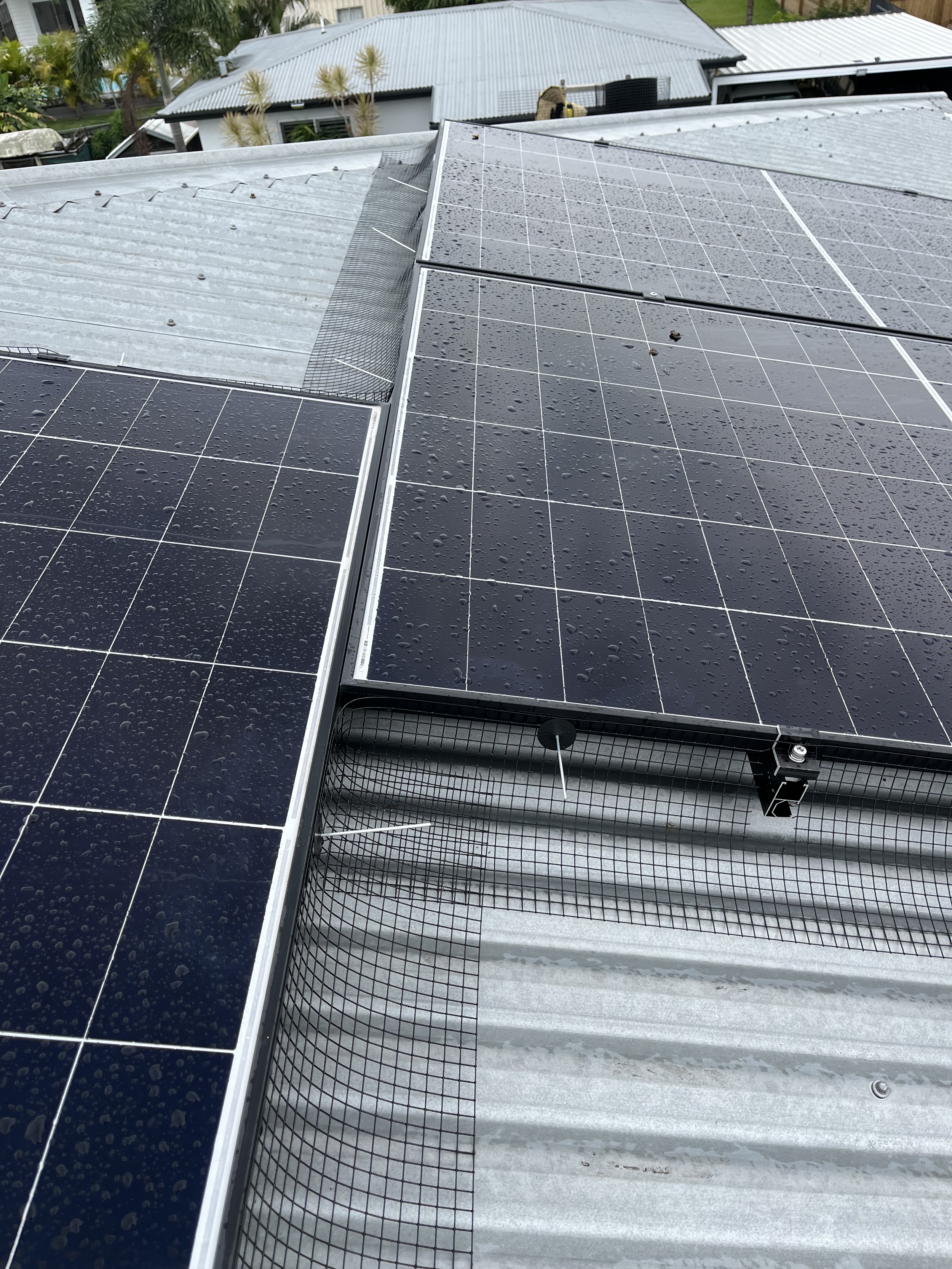
Solar panels provide the "perfect" real estate for birds, especially pigeons. They offer a high vantage point, protection from predators, and a warm underside thanks to the thermal energy generated by the panels. However, this symbiotic relationship is entirely one sided.
1. Fire Hazards and System Damage
Birds bring nesting materials such as dried grass, twigs, and feathers—into the tight gap between the panels and the roof.
Heat Trapping: These materials block airflow, which is critical for cooling the panels. Overheating can lead to hot spots and reduced efficiency.
Chewed Wiring: Birds (and the possums that often follow them) may peck at or chew the protective coating on DC wiring, leading to short circuits or potential fire risks.
2. Corrosive Accumulation
Bird droppings are highly acidic. If left to accumulate on the surface of the panels or the mounting hardware, they can:
Permanently etch the glass surface of the panels.
Corrode the aluminum frames and mounting racks over time.
3. Significant Efficiency Loss
Solar panels work in a string. If a significant amount of bird droppings shades even a few cells on one panel, it can disproportionately drop the energy output of the entire string. This is known as the "Christmas light effect" one bad link affects the whole chain.
4. Roof Damage and Hygiene
Nests can block gutters and drainage channels on your roof, leading to water pooling and leaks. Furthermore, bird mites and the smell of accumulated droppings can eventually migrate into the home through vents or roof spaces.